Thursday, October 29, 2009

The Ancient Warrior


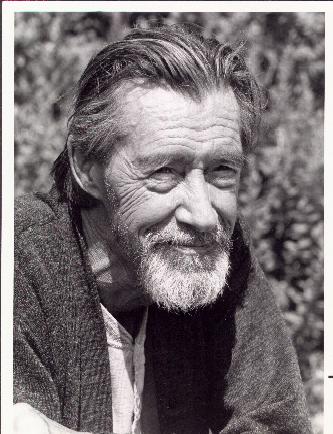
Season One of “Kung Fu” ends with what is simply one of its best episodes. In “The Ancient Warrior,” Caine befriends and elderly Native American (Chief Dan George) trying to return to his ancestral home so he can die peacefully and be buried there. Only one problem: on the ground of his forefathers now stands a town called Purgatory, and they don’t like Indians.

Caine befriends the Ancient Warrior and stands beside the man, even at one point protecting him from some village ruffians (one of whom is played by Gary Busey), but as has so often been the case, Caine is slightly off center from the real action, the struggle of the townspeople to do what is right by the Ancient Warrior and allow him his last request. Among the Purgatory town folk that have to hash this out is the righteous Judge Marcus (Will Geer) and the hateful Sheriff Poole (Victor French), who does a good job of protecting the town but is “a bigot and a tyrant.”

The Ancient Warrior, having staked his claim and pressed his legal right to the burial, basically sits in the dirt in the street and waits for justice. Caine waits with him, and as they do so they watch the town behave. They learn that there are good men like the judge and men like the sheriff who wear the mantle of goodness but, inside, are ethically compromised. An incident with a gunslinger named Lucas Bass (G.D. Spradlin), who confronts the sheriff over a past ill, is revealing – Bass gets shot in the back.

In the end it becomes quite clear to the Ancient Warrior that whatever hallowed ground there was at Purgatory has become spiritually polluted by the white man’s civilization. The Ancient wins his legal right to be buried there but after what he’s witnessed he spurns it. Better, he decides, to be buried in the wilderness where there is still purity than in the hypocrisy and contradictions of Purgatory. As Caine puts it, “It’s better to cover the land with love than let it cover you with hate.”

What a terrific story, consistent with the storytelling hallmarks I’ve been pointing out all along. Caine is a catalyst but not the only protagonist. The supporting characters are all as interesting and contribute to the plot. The episode takes a story and setting typical of the genre and subverts it, produces something new. Emblematic of the entire series and its mission.

IMDB is here. I gotta give this four out of four yin yangs. Some great reading on Chief Dan George at the link indicated.

So I’m finally, after, what, three years, wrapping up my review of Season One (something Kung Fu Cinema managed to do quite gracefully in one post). On to Season Two! I started this blog watching this show with my second child asleep on my chest every night and now, of course, that child sleeps on his own. But my love of this show goes on and I intend to stick with it. Along the way, it’s become a place for me to sound off not only on the show but on a wide genre that I love and the zeitgeist that goes with it, both of which “Kung Fu” were very much a part of. Thanks for sticking with me so far! I’ll try to be more consistent.

Labels: , ,

Tuesday, August 04, 2009

The Third Man

"The Third Man" is another excellent example of the formula and characteristics that make this show work. It concerns a gambler that Caine befriends, Jim Gallagher, another terrific western stereotype played excellently by veteran TV actor Fred Beir (check out this guy's resume at IMDB; like so many actores on this show, he's got lengthy experience on great TV shows).

Gallagher is country smooth, saloon charming, a damn fine card player - and quite hopelessly addicted to gambling. Caine temporarily joins Gallagher's household, which includes his caring but frustrated wife Noreen (Sheree North), and tries in his gentle, Chan Buddhism way to encourage Gallagher to change his life. (Great scene where Caine meets Fay and tells her, "I work... eat... learn.") Unfortunately before Caine can succeed Gallagher is robber one night after a hot run at the table, and accidentally killed by the noble but all too human town sheriff, Sheriff Raha (Ed Nelson).

Caine is the only one that sees who really killed Gallagher, and here's where the plot gets, to me, interesting. Sheriff Raha witholds his guilt from the incident because he is secretly in love with Gallagher's widow. It's clearly eating Raha alive to hide his involvement in the accidental death, but he won't step forward - he thinks this will allow he and Fay to finally be free of Gallagher and be together. Instead of doing the detective work necessary to expose Raha, Caine simply waits. He recognizes that Raha wants to do the right thing and, as is characteristic with this show and Caine's solution to its conflicts, Caine enables, through inaction and dialogue, Raha to do the right thing.

Of course, Caine also has to contend with the thugs that robbed Gallagher, still at large, which he does with much appreciated ass whuppery. There's also a terrific flashback involving Master Kan that helps explain Caine's method in this case, an incident involving the theft of some gold plates from a Shaolin altar; Kan lets the crime go, teaching Caine that sometimes good people do bad things, and charity and understanding are required in response. (You can see part of it in this nice edited version from YouTube vid below.) This sounds like a pretty convoluted plot and it's one that might have sunk the episode in its execution, but writer Robert Lewin and director Charles D. Dubin keep "The Third Man" on track so that it is exemplary. Four out of four yin yangs. IMDB for this episode is here.

By the way, Sheree North, who plays Noreen, was an interesting Hollywood figure that I never knew much about until I looked into this episode. You might recognize her as Lou Grant's girlfriend from "The Mary Tyler Moore Show," Kramer's mom from "Seinfeld," or several other roles. Apparently she was rumored to have been hired as a countermeasure against the unreliable Marilyn Monroe, with whom she shared exact measurements! More interesting reading is here.


Labels: , ,

Friday, February 06, 2009

The Stone

There's too much going on in "The Stone," and that's what makes it one of the first season's worst episodes, which is too bad, because the ideas are good and the potential is great.

"The Stone" is about exiles, of which Caine is one. He meets Montoya (Moses Gunn), a Brazilian son of a former slave and master of the Afro-Brazilian fighting art of capoeira. Montoya has a giant diamond that he is going to use to make his fortune, a quest he sees as deeply personal because it will lift his family's legacy from the shackles of slavery.

Caine also meets Zolly (Gregory Sierra), an Armenian who has fled the Russian (or Ottoman? It isn't clear) conquest of his country and wants to raise enough money to return as a freedom fighter. Only Zolly falls in love with a frontierwoman and her three kids, something that doesn't fit into his plans.

The convoluted plot (Montoya loses the stone to Zolly's potential kids while Caine gets involved and is being chased by bad guys and a marshall forcing Caine to confront Montoya and Zolly to confront the marshall and his purpose as a freedom fighter) doesn't bring these elements together efficiently, and in the end we're left with an episode that is spread too thin and relies on too many strange connections. So, honestly, I gotta give this one out of four yin-yangs.

Mark Pollard at Kung Fu Cinema has rightly pointed out that even having a capoeira theme to an episode is a remarkable example of the show's forward thinking. The art is well known today but in the 70s? Moses Gunn you'll recognize from a number of blaxploitation movies, including the Shaft films and other work. He's always seemed really wooden to me. Gregory Sierra you'll recognize as Julio from "Sanford and Son" and Sergeant Chano on "Barney Miller." Sierra gives a terrific performance here. Also of note - not all the fight sequences on the show were equally fun, as this episode shows. Lots of cutaways of Montoya's foot going into a bad guy's stomach, etc.

IMDB for this ep is here.

Labels: , ,

Superstition

What an evil situation this is! When it is discovered that a silver mine has penetrated an Indian burial ground, the mine becomes cursed and the workers flee. To keep it going, the mine owner and a corrupt sheriff press passers-through into service on trumped-up legal charges. Into this walks Caine. The men trapped here believe they have fallen under a curse. They have given up hope.

In classic "Kung Fu" fashion, Caine's presence in the mine redefines what it means to be in prison. After a (pretty cool) scuffle with some guards, Caine and fellow miner Meador (Don Dubbins) are punished by being placed in "the Oven," a tin shack that's unbearably hot during the day and just as cold at night. Caine survives this by meditating, and he teaches Meador to do so as well. "You are not within a prison. The prison is within you."

There's a great flashback scene with Master Po. Young Caine, curious about a locked hallway at Shaolin temple, is commanded by Po to brave it. He learns that the hallway is locked because it leads to a pool of acid where metal is electroplated, and Po wants Caine to traverse a beam over this acid pool. Looking down, Caine sees the bones of monks who have tried this and failed. Po is trying to teach Caine what Caine will later try to teach the miners about the "cursed" mine. "Superstition is like a magnet. It pulls you in the direction of your beliefs."

Ultimately, Caine's revolutionary ideas, his ability to inspire the men to shift mentally, lead to renunciation of the curse, cooperation and revolution. As is so often with this show, beating up the bad guys is not an option. Rather, Caine points the way, helps it along.

Veteran character actors round out the cast; Fred Sadoff of The Poseidon Adventure as corrupt sheriff Banack, Ford Rainey as mine owner Stern, and stuntman and character actor Roy Jensen as Rupp, one of the mine's potential leaders. Four out of four yin-yangs, IMDB is here. YouTube here.


Labels: , , , , ,

Thursday, December 04, 2008

This always happens to me.

So, last week I wrote the post about "A Praying Mantis Kills." At that time, I looked up actor Wendell Burton as part of my write-up. Read about Burton's role in The Sterile Cuckoo with Liza Minelli, his conversion to Christianity and career as a pastor and musician.

At that time, that same day, I said to my wife, "Wendell Burton, honey. You know how you learn something new and then you see it somewhere? Keep your eyes open. Something to do with Wendell Burton is going to happen to us soon."

What was on Turner Classic Movies this week? THE STERILE CUCKOO!! THERE WAS WENDELL!

This stuff happens to me all the time. I have also dreamed the future - dead serious. I get deja vu and then I remember that I dreamed that exact thing months ago. I am perfectly serious about this. I can see through time. Nothing big, no stock market predictions, just.... you know, bending time and shit.

Speaking of cosmic, got a nice word from Bobba over at Yin Yang Nature about "Alethea."

I’m glad you asked me about this episode, because I never really got the significance of it either. Maybe we found it a little disconcerting to see a child befriend Caine, then give evidence that condemns Caine to hang for a crime he didn’t do.

I read the DVD notes for this episode, and I found the first clue, “Seeing is believing. Or is it?” I then watched the episode again and I found the second clue. It was in the temple flash back scene where the Taoist Chuang Tzu’s famous butterfly story was mentioned.

“Once Chuang Tzu dreamed that he was a butterfly, flying about enjoying itself. It did not know that it was Chuang Tzu. Suddenly he awoke, and veritably was Chuang Tzu again. He did not know whether it was Chuang Tzu dreaming that he was a butterfly, or whether it was the butterfly dreaming that it was Chuang Tzu.”

I think this tale by the ancient sage Chuang Tzu is pivotal in understanding this episode, since it introduces the idea that reality is always relative to the observer. In other words, the truth in one particular situation, may not be the truth in another. Therefore, the truth has many different layers and is always relative.

In this episode, due to the angle, Alethea believes she sees Caine shoot a stage coach driver. From her position, she is unable to see it was a second shooter that was obscured from her sight by the stage coach horses. Therefore Alethea’s sensory awareness and position as an observer, gives her a distorted perspective of the truth.

If we didn’t know better we would believe parallel train tracks met at the horizon, but we understand this is an illusion and so we disregard our sensory input. In the same way Alethea comes to the understanding that although her senses have convinced her Caine shot the stage coach driver, she intuitively knows that Caine is not capable of such an action. She therefore changes her testimony and Caine escapes the gallows.

I hope this gives you and your readers a better understanding of this episode and an insight into the philosophy of the Shaolin.

Wonderful insights, Bobbs. I was thinking along these same lines - that Caine is trying to teach Alethea about the value of her perspective and convictions, and that her perspective has to live in the world with everyone else's often conflicting perspectives. I think my major problem with the episode was the heavy handedness of the dialogue. This sometimes plagues "Kung Fu," I think - they can't all be winners!

Labels: , , , ,

Wednesday, November 26, 2008

"The Praying Mantis Kills"

As I was watching "The Praying Mantis Kills" a second time, it occurred to me that there are three basic elements of the episodes in this classic first season that, at least to me, are at the core of the show. Even though the makers of "Kung Fu" tried hard, it seems, not to adhere too strictly to any formula for the series, the three characteristics of a great season one episode are a classic western scenario, exciting displays of martial arts culture, and fantastic performances by solid character actors in the supporting roles. "A Praying Mantis Kills" has all three and would make a great suggestion for anyone wanting to get a feel for the show by watching just one episode.

Classic western: gang vs. gang. Some great westerns retain the question of what exactly makes the good guys right and the bad guys wrong, but in the case of "Mantis" you've got a clear distinction between them, virtuous law on one side and destructive outlaw on the other. On the law side is the sheriff of another small town, Sheriff Crossman (Norman Alden), his son Marty (Wendell Burton) and a reluctant townsman, Mr. Roper (William Schallert). On the outlaw side, the Darrow gang (headed up by Don Knight). A quisling plays a role in the form of Victor (Dennis Redfield), Marty's rival and a pretender in the law camp.

Martial arts: into the scenario of a gang robbing the local bank and threatening to kill anyone that identifies them wanders Caine, who alone stands up to testify against the murderous thieves. As Caine comes under the sheriff's protective custody and befriends and mentors Marty, we are treated to Shaolin philosophy, displays of no-mind archery, and of course, excellent flashback sequences to the Shaolin masters Kan and Po. Caine, shooting bow and arrow blind, says, "It is not 'done.' It is experienced."

Great character actors: spend some time at IMDB and take a gander at the resumes of any of the actors who appear in this series and you will see a plethora of great roles that include such shows as "Bonanza," "Gunsmoke," "Streets of San Francisco," "Dallas" - various cop shows and prime-time soaps, family dramas, comedies, the list going on and on and spanning the 50s to the present. English-born Don Knight as Darrow brings a brogue to the villain and a classic, veteran "cold killer" aura. Dennis Redfield as Victor has one of those faces that I know I can place if I (and Google) just try a little harder (I swear I've seen him playing some kind of psychotic somewhere). Likewise the young Wendell Burton as Marty (IMDB says he is best remembered opposite Liza Minelli in "The Sterile Cuckoo"). William Schallert, too; he was the dad on "The Patty Duke" show and appeared in the "Star Trek" episode "The Trouble With Tribbles!"

The story in this episode is equally compelling, as it forces Caine to examine his views on violence (articulated by Master Kan as avoiding all violence except to protect yourself and others). Usually, Caine is passing sage lessons on to the characters of "Kung Fu." In this case, there is that, but his new found friends also challenge him to stand up to the evil of the Darrow gang, an evil that can not be ignored. One gets the sense in this episode, as one seldom does with this show, that Caine here is still figuring it out, right to the very end.

One more observation. As I was watching this episode it also occurred to me, as it has often, that David Carradine really was the right actor for Caine, rather than Bruce Lee. The myth still pervades popular culture that "Kung Fu" was Lee's brain child but the truth is it was created by Ed Spielman and nurtured by a company of very intelligent producers, writers and directors at Warner Brothers. Lee was considered for the role of Caine and didn't get it because, among other reasons, his accent was very thick.

Watching the show now, I can't help but think that all happened as it should. Lee went on to make his great films and left us far too soon. Carradine brought to the role of Caine a dreamy hippy quality that would have simply looked wrong on Lee - as capable an actor as Lee was. There's a scene in "Mantis" in which Caine gently leads a foal to a bucking stallion, calming the stallion. I can't imagine this being performed by Lee with the same sense of earth child peace as Carradine. Even the action scenes, which under Lee would have been so much stronger and more vibrant, are right with Caine. "Kung Fu" is to such great landmarks as Enter the Dragon what baseball is to football; they are in the same family of things, but they entertain us and delight us in different ways.

Anyway, that's my view! Four out of four yin-yangs. This image I got from a delightful blog called My Love for Liza: An Intimate Look at a Fan's Devotion.

Labels: , ,

Tuesday, November 18, 2008

"Alethea"

This episode is frequently cited as noteworthy because it starred a young Jodie Foster but I wasn't terribly thrilled by it. Caine comes into another town, where he befriends a young girl, Foster in the title role. Trouble occurs when a robbery and murder breaks out. Alethea, observing from behind some cover, wrongly identifies Caine as one of the killers. Caine is locked up and sentenced to hanging, his conviction hinging on Alethea's testimony.

Caine does not condemn his friend Alethea with words. Instead, he lets himself be imprisoned and even lead to the gallows so that Alethea can discover the truth for herself. Here's where the episode loses me and maybe I'm just being dense - in the eleventh hour, she changes her testimony and saves Caine. Is it because she remembers the truth? Admits she didn't see clearly? This is never confirmed. The point is that Caine puts himself in the noose so that Alethea can state what is and isn't.

I wasn't crazy about it, and if you have another perspective on this episode, I'd be glad to hear it! Maybe our good friend Bobba has a perspective. One out of four yin-yangs. IMDB is here.

Labels: , ,

"Chains"

In this episode, Caine is arrested and imprisoned in the same cell as an inarticulate, shaggy, berserker named Huntoon (Michael Greene). Huntoon, it turns out, was in a prospecting gang with Cain's half brother Danny. Caine agrees to liberate Huntoon and himself from the jail to pursue Danny. Huntoon hopes to find not just Danny but a load of gold they'd acquired prior to Huntoon's run-in with the law - for a killing he says he did not commit.

Caine and Huntoon are pursued through the mountain wilderness by Sergeant Bedford (Warren Vanders), an excellently defined western archetype, the tough, stoic officer to whom duty is everything. A wonderful balance ensues between the three characters, with Caine in the center as the pivot. As Caine and Huntoon ascend the mountain, Caine, having recognized in Huntoon not the murderous savage that the civilized society labels him but a genuine human being capable of grace and communion, reveals to Huntoon his capacity for gentleness, friendship and love. Bedford, meanwhile, who starts out the episode the very epitome of law and order, becomes treacherous. In the climax, a bloody encounter in a mountain shack, the question of which is the noble and which the wicked is turned on its head.

As much as I enjoyed this tryptich there was something out of balance for me about this episode. I think it has to do with how much time is spent developing the character of Huntoon at the expense of Bedford. As the episode unraveled, Bedford's motives seemed out of place to me. He eschews money earlier in the episode, then is tempted by it later. Perhaps as he gets farther away from the fort that defines him, he loses his grip on his identity and principles.

Regardless, an enjoyable episode. The flashbacks to Shaolin underscore the theme; in one scene, Master Po asks young Caine to examine the problem of evil as applied to nature; which is evil, the rat that steals or the cat that kills the rat? "Each acts according to his nature," Po advises. And later, "A man may tell himself many things, but is a man's universe made only of himself?"

Duality, plurality, assumptions turned inside out, characters plunged into a symbolic wilderness, stripping them of exterior assumptions and revealing interior truth - "Chains" is a reminder of just how literary this show could be.

Three out of four yin-yangs. IMDB for this episode is here. Both Greene and Vanders were, like so many actors who contributed to the show, veteran character actors. Our good friend at Yin Yang Nature has got an excerpt from this show online.

Labels: ,

Sunday, April 27, 2008

"Sun and Cloud Shadow"

In this episode, Caine wanders into the middle of a dispute between some Chinese settlers and the man who owns their land, a hard-bitten but meditative ex-military man called Colonel Binns (Morgan Woodward). The gist of the disagreement is that the Colonel abandoned a mountain and the Chinese stayed behind to mine it, persevering until they found gold. Now that the mountain has proven to be valuable the Colonel wants it back, and all the gold in it.

The racist behavior of the townsmen, particularly Binns’ sons Doug (Dennis Lee Smith) and Dave (Richard Hatch from the original “Battlestar Galactica”) aren’t helping the situation. In fact, in the beginning of the episode Caine is marginally involved in a scuffle in which Doug shoots and kills one of the village elders, Ying (John Fujioka). Caine also learns that Dave has a secret love affair with one of the Chinese girls, Po Ten or “Cloud Shadow” (Aimee Eccles). Po Ten had once been a servant in the Binns house.

The Chinese are prepared to take up arms to defend the mine, and Caine, revealed by his brands to be a Shaolin priest, agrees to represent them and negotiate some kind of agreement between them and Colonel Binns. Caine and Binns hit it off – Binns admires the “tiger” in Caine, although Caine tries to show this man, who only understands the outcome of battles, that there’s more to warriorship than physical victory. But he’s able to reach an accord with Binns, in a great scene in which Caine shows just how incapable of manipulation he is.

Unfortunately, things get complicated, as Ying’s son (Clyde Kusatsu) takes revenge for his father’s death, and Dave refuses to man up to his relationship with Cloud Shadow. On top of that, a Pinkerton operative has traced Caine to this location, and brought a Manchu martial arts expert to deal with Caine. Everything comes to a head in the episode’s climax.

Something about “Sun and Cloud Shadow” bothered me. I think I found the love story distracting. The resolution of the conflict left me lukewarm, too, as Caine faces his adversary in a pretty cool fight sequence, then turns to Dave and demands, “Choose,” meaning he must choose to face his father and claim his Chinese bride or remain silent, honor his father and let Binns cannon the Chinese. This just didn’t have the same ring of revelation and enlightenment that Caine brings to some of his other encounters with characters. I think I would have enjoyed more interplay between Caine and Binns and Caine and the Chinese, perhaps Ying’s son, showing these multiple sides of Caine, as Chinese and American, warrior and peacemaker.

Two out of four yin yangs. IMDB is here. The Manchu was played by veteran stunt man, karate instructor and actor Bill Ryusaki (image from Schumann’s Martial Arts Training Center).

Labels: , , , , , ,

Monday, April 21, 2008

Kung Fu Cinema: Good round up of Season One

From the launch of this blog, I noted in my blogroll that Kung Fu Cinema as a great online resource for all things related to kung fu movies. Recently, I came across the site's review of "Kung Fu" Season One. An excellent round-up of the first season. Kung Fu Cinema's Mark Pollard writes:

In 1972, the word “kung fu” didn’t mean anything to most Americans. Bruce Lee had caught on in Asia, but was only beginning to be noticed in the States despite his previous appearance on the GREEN HORNET television series. Apart from a handful of Hong Kong kung fu movies like KING BOXER, released in grindhouse theaters, there wasn’t much to see regarding kung fu action. So for creator Ed Spielman and developer Herman Miller to pitch a network action series for American audiences based on Shaolin kung fu with an emphasis on Buddhist philosophy was quite remarkable.

Labels: , , ,

Friday, April 18, 2008

"Nine Lives"

The title of this episode cleverly refers to a cat that drives the plot and to a chain of debt that is created and extended between characters.

"Nine Lives" is primarily the story of Shawn Mulhare (Albert Salmi), an Irishman trying to make his fortune in America. Caine befriends Mulhare at a mining camp. When the camp's feline mascot, Boozer, is killed in a dynamite accident caused by Mulhare and Caine, they are kicked out of the camp (there is a hilarious "court room" scene leading up to this), and banished from returning until Mulhare can find a replacement. Mulhare desperately wants this, as he thinks he's found a secret vein of gold. He carries a sample with him.

Caine follows Mulhare and tries to help him, in part because that's perhaps what he would do anyway but also because Caine owes a debt of honor to Master Po. Master Po helped Caine as a child in China, and explained to Caine that he, Po, was similarly helped in an accident when he was a boy by a stranger who said to him that he was now bound by debt to assist 10 others. Caine was one of Po's 10, and Po passed the debt on to Caine. Mulhare, it seems, will be one of Caine's 10.

Set adrift, Caine and Mulhare wander in search of a new Boozer, at one point being set upon by the demented Skowrin family, a gang of bandits and con artists headed by a father, Henry, (Royal Dano) and a gaggle of unwashed sons that includes the hulking Perlee (Merlin Olsen!). Caine and Mulhare are robbed by the Skowrins.

Eventually, the pair make their way to the riverside home of the Widow Tackaberry (Geraldine Brooks). They aid the widow in delivering a calf (great scene, and one in which Caine uses his animal calming power again) and agree to dig a well on the widow's land in exchange for her cat. Unfortunately, the Skowrins discover Caine's identity and come seeking him to claim the reward. They bind Caine, but Caine goads Perlee into fighting him (one of the Skowrins' cons is to have Perlee wrassle all comers for money). In the ensuing melee, Caine, Mulhare and the window are able to turn the tide against the Skowrins – and they also discover that Mulhare's sample of gold is worthless fool's gold.

But there's one last turn to this plot. Now that Mulhare knows Caine is worth money, he contemplates turning Caine in, and has an opportunity to do so. I won't tell you how this ends but I will tell you that Po's Debt is encountered once again, and Mulhare must come to grips with himself as a man of honor as well as a fortune hunter.

Great episode. As I've said, in this show Caine is often a supporting character in the plot, in this case a supporting character to Mulhare, the real protagonist. That's one of the things I feel was truly revolutionary about this show, that it didn't always have to have Caine at center stage. It is the first episode in which we learn of Po's Debt, something that will return again in the series. I think for someone like Caine, he realizes in assuming the debt and fulfilling it that helping others is so virtuous and feels so right that he needn't stop at 10. The debt is only the incentive that gets him started on the path of a virtuous, heroic life, one in which he realizes he is bound by love, kindness and transcendence to everyone in the human family.

Four out of four yin yangs. IMDB for this episode is here. Look at the actors and writers and directors in this show; it's amazing how many great careers were created at this time in TV history.

Labels: , , ,

Sunday, April 13, 2008

"The Tide"

In “The Tide,” Cain demonstrates two important values in his belief system; that it is better to trust, even when trust leads to betrayal, and that it is acceptable for a man to love a woman, even when that relationship leads to pain.

Caine is passing through a coastal town, presumably in California, when he is recognized and arrested by the local law, Sheriff Boggs (veteran character actor Andrew Duggan). When it becomes clear to Caine that Boggs would be just as happy to collect the reward for a dead Caine as a live one, Caine fights his way free and escapes, but is shot and wounded in the process. A Chinese woman that lives in the town, Su Yen Lu (Tina Chen) helps Caine and hides him, at first in a barn and then in a cave on the rocky shore of the ocean.

Su Yen Lu is the daughter of an important Chinese poet whom Caine recognizes and for which he has great admiration, a man imprisoned for political reasons by the same emperor that has put a price on Caine’s head. In Yu’s care, Caine is slowly healed and he becomes Yu’s lover. Unbeknownst to Caine, however, Yu is betraying him. She sends for her brother, Wong Ti Lu (played by the wonderful Japanese-American character actor, Mako). Her plan is to ransom Caine to the emperor in exchange for her father’s freedom.

When the plot is revealed, a pretty cool fight scene ensues but Caine agrees to be the Yus’ prisoner. As they try to leave the cave, however, Boggs catches up with them, shoots and kills Wong Ti Lu, and is shot himself by Su Yen Lu. The plot foiled and the treachery revealed, Caine and Su Yen Lu agree to part ways, with Caine bearing a book of her father’s work and no real malice.

What’s significant about “The Tide” is the emphasis placed on the flashback scenes. Every episode of “Kung Fu” makes use of these, usually to show Caine’s thinking or make some comment on his current action. In this case, there are two flashbacks that reinforce the theme of trust and love.

In the first, young Caine and a fellow acolyte named Hong Fo are on their way to the market to buy food for the Shaolin monastery. An old man by the roadside warns the boys that there are too many bandits on the road, and diverts their path. They are robbed. (Another great Asian-American character actor, James Hong, whom you may recognize as “Seinfeld? Four?” and the great villain Lo Pan in the delightful Big Trouble in Little China.) When Caine and Hong Fo return to the temple, Master Kan asks what they learned from the encounter. Hong Fo responds, “Never trust anyone.” Caine responds, “Expect the unexpected.” Hong Fo is summarily dismissed! Only Caine has shown the capacity Kan seeks – he tells Cain that it is better to trust in the good of all people, even when that trust leads to betrayal. Kan wants Caine to preserve not a face of animosity to the world, but one of collaboration.

In the second flashback, Kan and Caine are at a street festival watching an attractive woman perform a folk dance. This is a great scene, with the great Philip Ahn as Kan looking on the performance and smiling and Radames Peres as Caine, behind Kan, looking deeply uncomfortable. Kan, not even looking at Caine, asks Caine what he is feeling. Caine insists he feels nothing. Kan knowingly informs Caine that what he feels for the woman on stage is natural and not something to be fought. This is a wonderful moment by Peres, who just looks at war with himself, the Shaolin equivalent of getting a hard on in math class and wishing you could sink into the earth.

Thus, the Shaolin flashbacks are just as much a part of “The Tide” as the action with Su Yen Wu, her brother and Sheriff Boggs. It gives us a more complete picture of Caine the man, though it raised several questions for me. Specifically, it caused me to question whether Caine is a priest of Ch’an Buddhism, as I believe the Shaolin were and are, which would have made him a celibate. I believe he is not a priest in the strictest sense, that since he was always destined to “snatch the pebble and leave” he is not bound by the same regulations as a full-fledged Shaolin monk – even though he wears the brands on his forearms. Certainly, the series played fast and loose with Chinese philosophy and history, so strict adherence to a historically accurate view of a Shaolin monk or Chinese philosophy is not necessarily a priority. The show’s philosophy, as we have noted, is a 1970s hybrid of new age ideas. But to hell with it, this is a show about a half-Chinese kung fu guy wandering the Old West, after all! The point is Caine long ago learned his lessons at the feet of Master Kan. He trusts, he loves, he accepts betrayal, he conquers, and his heart is unstained at the end, he moves on.

Still, I hope to spend some more time on the philosophical side of “Kung Fu” and the characters Master Kan and Master Po later. I’d also like to write more about Mako, who had wonderful roles in the Conan movies and a show I like called Avatar and who just died in 2006. Tina Chen, I believe, is the attractive Asian woman who gets killed in the beginning of Three Days of the Condor.

As enjoyable as this episode was, I like this format a little less than I do the one in which Caine is a supporting character undermining the Western, so I can only give this three out of four yin-yangs. IMDB for “The Tide” is here.

Labels: , , ,

Wednesday, January 17, 2007

Episode 5: The Soul is the Warrior

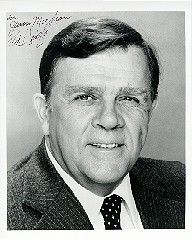
This was easily one of my favorite episodes, mostly due to the chemistry and interplay between the main characters: Caine, the local sheriff (Pat Hingle) and a boss landowner, Rankin (John Doucette). What happens is, Caine comes into town looking for Danny. He doesn't find him, but he does find a man Danny wronged (we're starting to learn Danny is a real card, perhaps the anti-Caine), and when this man tries to whup Caine's ass and then kill him, the sheriff, protecting Caine, shoots him dead. This puts the sheriff at odds with the man's dad, Rankin, who, as an agricultural/cattle boss in the real 19th-century sense, is the local law; everything bends at the behest of his monied hand.

Again, the Old West theme is being played out with Caine as a peripheral character. The theme is the legitimate law, as personified by the righteous sherrif, against the corrupt power of the boss, wonderfully played by boom-voiced Doucette. The frontier, with its absence of order except that which is imposed by strength, puts in question which is the greater power, the law or the money. Boss Rankin has a bit of Apache blood in him and credits some of his virile, angry behavior to this. He's also obsessed with snakes, because he is afraid of them. He keeps a big pit of venomous rattlers on his property precisely because it is one of the few things he fears.

The situation between Rankin and the sheriff escalates until Caine finds a way to intervene. In a showdown, Caine asks Rankin if Rankin will forget his vendetta if Caine faces Rankin's snakes. Rankin, the Apache in him finding perhaps some instinctive kinship with the Shaolin in Caine, agrees to this test. We have seen by now that one of Caine's supernatural, Shaolin-taught abilities is that he can calm animals (he used it on a wild horse in the first episode, and calms various dogs and things). Caine centers himself and walks through the snake-pit. When he emerges unharmed, Rankin is incredulous, moved, the situation resolved. Doucette even has a great line in Apache – I'm sorry, I don't remember what it was, I'll have to look it up, but it was something like, "Damn! That Shaolin dude is the man!"

Though I have tried, over the years, to familiarize myself with movies of all genres, I'm not terribly familiar with westerns. Doucette is apparently a veteran character actor who played a lot of bad guy roles. Wikipedia says he was considered by many to be the fastest draw in Hollywood! Hingle is excellent, too, and apparently a well-known character actor like Doucette. You'll probably recognize them both if you see this episode.

Five out of five yin-yangs. I just feel this episode is what the series is all about: Caine as spectator-participant in a classic western story with great actors personifying the genre and an ending you don't see coming. IMDB for the episode here; IMDB on Doucette and Hingle. And apparently, Ron Bishop, the guy that wrote this episode, was a veteran writer for "Gunsmoke" and is considered by many to be one of the best TV western writers ever.

Labels: , , , ,

Monday, November 06, 2006

Episode 4: An Eye for An Eye

By now we viewers of Kung Fu should be getting the point that we will encounter characters and plots from traditional Old West stories, and that these characters and their situations will be affected by the presence of Caine. "Eye for an Eye" is another excellent demonstration of this. In this episode, Caine takes up company with the Buchanans: an aged Confederate soldier (post Civil War, I think the story takes place in the 1870s) and his daughter, who is pregnant by a Union soldier she claims raped her. Father and daughter are set on revenge, of course, with equal vigor. (Caine is shocked at the venom in the pregnant woman, and her apparent disinterest in her own child.) They are traveling to link up with the old soldier's son, Sam, also a Confederate soldier and fine Southern gentleman.

Sam Buchanan is played marvelously by an actor named Tim McIntire. Huge, strong, stately, controlled, fierce and serious, he goes through the appropriate duello rituals with the man who raped his sister, even confessing that he'll have to borrow a saber if they are to settle the matter with swords. They settle it with guns, though, and there are disastrous results. Both are killed due to the Union soldier's treachery.

The rest of the episode is spent trying to navigate the after-effects of revenge-seeking, something that always takes place in any decent revenge story, which, from Hamlet to the most basic Western or kung fu story, plumbs the culture of revenge in which the setting of each story takes place. The Union soldier has friends and fellow-evildoers who participated peripherally in the rape and want revenge for their comrade; the Buchanans want revenge for Sam. Encompassing this is not only their personal tragedies but also the legacy of the national tragedy that has been a big reason for their hatred of one another; they were on opposite sides in the Civil War; the Confederates see the Unionists as invaders and the Unionists see the Confederates as traitors and guerillas.

But, remarkably, this isn't the focus for Caine. It's almost a non-issue for him (almost, he still has to defend himself). Of more interest to Caine, and thus for us the viewers whose story is reprioritized by our protagonist, is the saga of the enmity between Annie and her unborn child. Because she, too, is a Southern gal full of spitfire and anguish, she cannot fulfill her role as mother to the seed that has been planted in her (against her will). This repulses Caine, whose Shaolin masters taught him to love and respect all life regardless of the situation (some great flashbacks in this episode to that effect). Caine makes it his mission to heal Annie's spirit and reconcile her with the innocent baby.

In the end, the forces set on revenge try to draw Caine into it, but he resists, protecting the Buchanans physically and spiritually. The line that sums up this episode may well be a line that sums up the entire series and the point I made in the first sentence about having Old West themes turned inside out by our new age hero, Caine. The last scene has the old Confederate patriarch, Buchanan, begging Caine to help him get revenge on the Union soldiers still at large. He even offers Caine his last valuable possession – his old officer's saber. Caine takes the saber in hand and breaks it, symbolically demanding an end to the cycle of revenge-and-revenge-for-revenge. Incensed, Buchanan screams: "If I don't have a right to vengeance, who does?" Caine answers in that dreamy, perfectly intoned way Carradine gives the character: "No one." This is Kung Fu's indictment of the Old West, the west – possibly of everything that was going on in the 1970s at the time, a perfect new-age post Krishnamurtri statement in the era of Vietnam. No one has a right to venegance. Seek instead to heal and reconcile.

Four out of four yin-yangs. IMDB entry for this episode is here. Interesting factoid if you click on some IMDB links: Tim McIntire was considered for the role of Meathead in All in the Family! According to Wikipedia he also composed the music for Jeremiah Johnson and was the voice of the dog in A Boy and His Dog! Shame I can't find a decent pic of him to put up in this entry. Allmovie.com entry here.

Labels: , , , ,

Monday, October 23, 2006

Episode 3: Blood Brother


"Blood Brother" was a great episode in that it relies not on Caine's fist- and footstifcuff ability but on his cleverness. Also gets into his ninja-like stealth abilities. "A Shaolin priest can walk through walls," says one Chinese character. "It is said that listened for he cannot be heard. Looked for he cannot be seen. Felt he cannot be touched." (Thanks, B.E. Warne.)

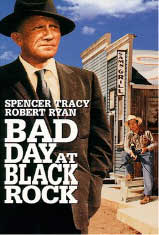
The plot is a great one, one I've seen employed before, mose memorably in a movie that was pretty significant for martial arts in western film, Bad Day at Black Rock (1955). That film starred Spencer Tracy as a one-armed man who comes to a small Arizona town looking for an old Japanese acquaintance, Kokomo. It soon becomes clear that something gruesome happened to Kokomo, and Tracy karate-chops his way to justice, exposing the black heart of the whole town. (There's actually only one Asian-fight-type scene, not like Tracy gets all Billy Jack on Ernest Borgnine.)

"Blood Brother" utilizes the same plot. Caine arrives in a town to discover his friend from the Temple, his blood brother, Lin Wu (I hope I'm remebering the name right) has been there, but seems to be missing. His search for Wu brings back memories of their days at the Shaolin Temple together, and reveals that Wu may have been targeting by a gang of toughs. Instead of wrecking Bruce Lee-style vengeance on everyone, however, Caine tricks the toughs into leading them to Wu's body, hidden in an outlying swamp. Caine now has the evidence he needs to turn the toughs over to the law.

There's a somewhat heavy-handed court scene at the end where Caine has to encourage the local, scared Chinese population to take the witness stand but also gives a speech defining humanity for a bigoted courtroom. One of the things I love about this series is when Caine is overshadowed by the other characters, and that doesn't really happen here. But a fun episode nonetheless, with some notable fight scenes, good flashbacks, and a good plot. Three out of four yin-yangs.

By the way, you can see a trailer for Bad Day at Black Rock here.

Labels: , , ,

Thursday, October 12, 2006

Episode 2: Dark Angel


This one was deliciously weird and featured powerful performances by David Carradine as Caine, his father John Carradine as scallywag preacher Serenity Johnson, and his brother Robert Carradine as Serenity's mute assistant, Sonny Jim. (Keith Carradine also appears in a role he frequents throughout the series, a younger version of Caine, that is, Caine between Radames Pera and David Carradine.)

The plot is that Caine comes to the aid of a prospector who has been wounded in an Indian (there's that word again) attach. Caine fights off the warriors in a wonderful sequence filled with taut action and little dialogue, then learns that the prospector has evidence of a claim in the wilderness. Caine is too late to save the man from succumbing to his wounds, so he takes the body into town. He is apprehended by a mob but his neck is saved by Johnson.

Again, we have a supporting character in the series that is just as interesting as Caine, even more interesting in some ways. Johnson is an enthusiastic and sincere preacher. He takes care of the town's vagabonds and is sincerely affectionate to all around him, including his deaf mute valet, Sonny Jim. But Serenity is also a whiskey-sipper and a gambler, always on the look out for a buck. He is eloquent, and uses his powers just as often to bilk rubes as to save souls. Still, he tells Caine, he dreams of building a church – that's what he needs the money for, really. And when he learns about the claim Caine has preserved, he teases it out of Caine and goes after it.

Bad move by Serenity. The natives find him and bind him to a tree with his eyelids forced open so that his eyes are burned by the sun. Serenity is now blind. The plot of this episode takes an interesting turn here in that Caine – inspired and instructed by, of course, his old blind teacher, Master Po – begins to encourage Serenity and then to teach him, teach him to continue his work despite his blindness.

It works, spectacularly. That's the main plot of this episode, and the most interesting, to me. The sub-plots are: Some local toughs try to take the prospector's claim from Serenity by force, a move which Caine thwarts, and, meanwhile, Caine's grandfather lives at the edge of town and Caine is trying to learn more about the roots. The grandfather is an ice-hearted racist and refuses to acknowledge Caine, but the newly empowered, Po-like Serenity Johnson intervenes, and at least gets the man to help Caine with information about Caine's half-brother. At the end of the episode, Johnson is building his church – the Church of the Inner Vision (I can't help but think of Stevie Wonder every time I picture that) – and Caine is moving on to learn more about his half-brother, Danny.

As I said, to me the most interesting character is Serenity Johnson, crusty on the outside, quick with a wink and a quip, genuinely spiritual and strong on the inside. Caine sort of remakes him in Po's image; actually, it's more accurate to say Caine helps him remake himself (something he will do often in the series, not often as effectively portrayed as it is here). The strength of the Serenity Johnson character is borne out by John Carradine's magnificent performance. If you see this one, look at the deep lines in Carradine's face but especially at his hands. The guy walked right out of a Eugene O'Neill play. Some interesting factoids about him at IMDB here, and here is the IMDB info for this episode. Four out of four yin-yangs.

Labels: , , ,

Wednesday, October 11, 2006

Episode 1: King of the Mountain


This was an excellent episode. It was the first episode to appear after the successful pilot for the show. Watching it now, right away it let's its audience know that this is going to be a different kind of western. It presents familiar westernandcarradine, kung fu, them on their ear by letting Caine interact with them. In this case, the themes are death and peril on the frontier, survival, revenge, and crime/apprehension/punishment.

I'll give a spoiler warning here. Also, instead of listing the names of actors, writers etc. in parentheses, I'd like you to refer to one of the episode guides in the blogroll for more information.

In "King of the Mountain," Caine discovers a young boy, Peter, whose family is wiped out by an Indian raid (I say Indian rather than Native American simply to use the parlance of the setting). Peter is the only survivor. Caine agrees to take the boy to some kin in another town. Peter is now alone, frightened, but determined to survive, clutching his dad's rifle – a quintessential western hero, really, who must accept violence and death as part of the price of frontier life and stand alone to impose order on the chaos, often through strength. On the way to the next town, Peter and Caine are accosted by some ruffians. The boy is appalled that Caine yields to them, letting them search him and potentially rob him. He doesn't yet see that Caine keeps his strength hidden and doesn't contend until he has to. This interesting dichotomy juxtaposes not just an eastern/kung fu ethic against a western one, but that of an older man against a younger. Peter could grow up to be Shane, John Wayne, Wyatt Earp or any tough out of a Louis L'Amour novel. He hasn't yet learned when to fight and when not to, as Caine has.

Once in the next town Caine drops Peter with his kin and finds work at a ranch. These characters exemplify what to me is one of the best aspects of the show – the supporting and minor characters, when sketched well, are as interesting or more interesting than the others, including Caine himself. In this case, Peter's extended family are ugly, disgusting people expressed with Snopesian accuracy. Upon seeing the boy and learning that his family has been killed, there's no empathy, no hugs or tears – they only want to know how much money or valuables he salvaged, and they want to take it. They're also indignant that a "Chinaman" may have helped himself to some of the family's stuff. So they pick him up by the ear and take him to see the Chinaman.

Caine, meanwhile, has befriended Amy, a woman who, against all odds, is running a ranch by herself. Caine agrees to work for Amy, who is kind. But while he's getting things straightened out in the stable here come the Snopes', the evil paw and some uncles. They accuse Caine of robbing Peter and attack him. Caine kicks all their asses in a wonderful sequence. (At some point I will riff on what I see as a worrying trend in action movies, that of chopping up the fight sequences into unviewable splinters. This being an old-school action film, that doesn't happen here. We may get treated to a scene of a Carradine foot in a bad guy's face, but the camera pulls back and let's us see the action in all its glory. Modern film-makers, please take note!) Caine turns to Peter when the fisticuffs are over and, with a disgusted sneer than even he cannot restrain, says, "Do you want to stay with these people? No? Then come with me." Peter joins Caine at Amy's ranch.

Peter, Caine and Amy settle in on the ranch. It's here we also see that Caine has a special ability, born of his Shaolin training, with animals (he calms a frightened and angry horse, and also has a great line, asking what "broken" means when referring to horses). Meanwhile, a black moustachio'd bounty hunter, Raven (played by our pal John Saxon of Enter the Dragon fame) shows up looking to collect the bounty on Caine – 5K dead, 10 alive. Caine's old enemies in China still want his head.

To make a long story short, a semi-romantic and possibly sexual relationship blossoms between Caine and Amy while Caine also begins to teach Peter valuable lessons about manhood. (There are some good Shaolin flashbacks that prompt deeper questions about the role sexual love plays in a Shaolin monk's life.) It's Raven's presence that now introduces the crime and punishment theme. After all, Caine is, in one context, a criminal, and Raven a righteous arm of the law. But we quickly see that Caine is spiritually and ethically more righteous while Raven is a blunt instrument of imprisonment and death, a nasty, self-centered and ultimately self-serving person who worships reward money, not any real sense of justice. Caine agrees to turn himself in but, manacled, fights Raven (another pretty sweet kung fu sequence). In the struggle, Raven loses his footing and plummets to his death. In the end, Caine must move along, knowing he still has to find his roots and that more bounty hunters and other agents will come gunning for him. He hopes he has empowered Amy and Peter enough to stand on their own.

An excellent episode and an excellent beginning to the series. Already, some of the things I love about the series – themes re-examined, characters, and of course great kung fu sequences – are present. Four out of four stars.

Here is the IMDB entry on this episode. which also contains an interesting bit of trivia. (Also says George Takei was in the episode, but I don't remember seeing him.)

Labels: , ,